Slipped Disc vs Sciatica: Understanding the Difference, Symptoms, Causes & Treatment Options
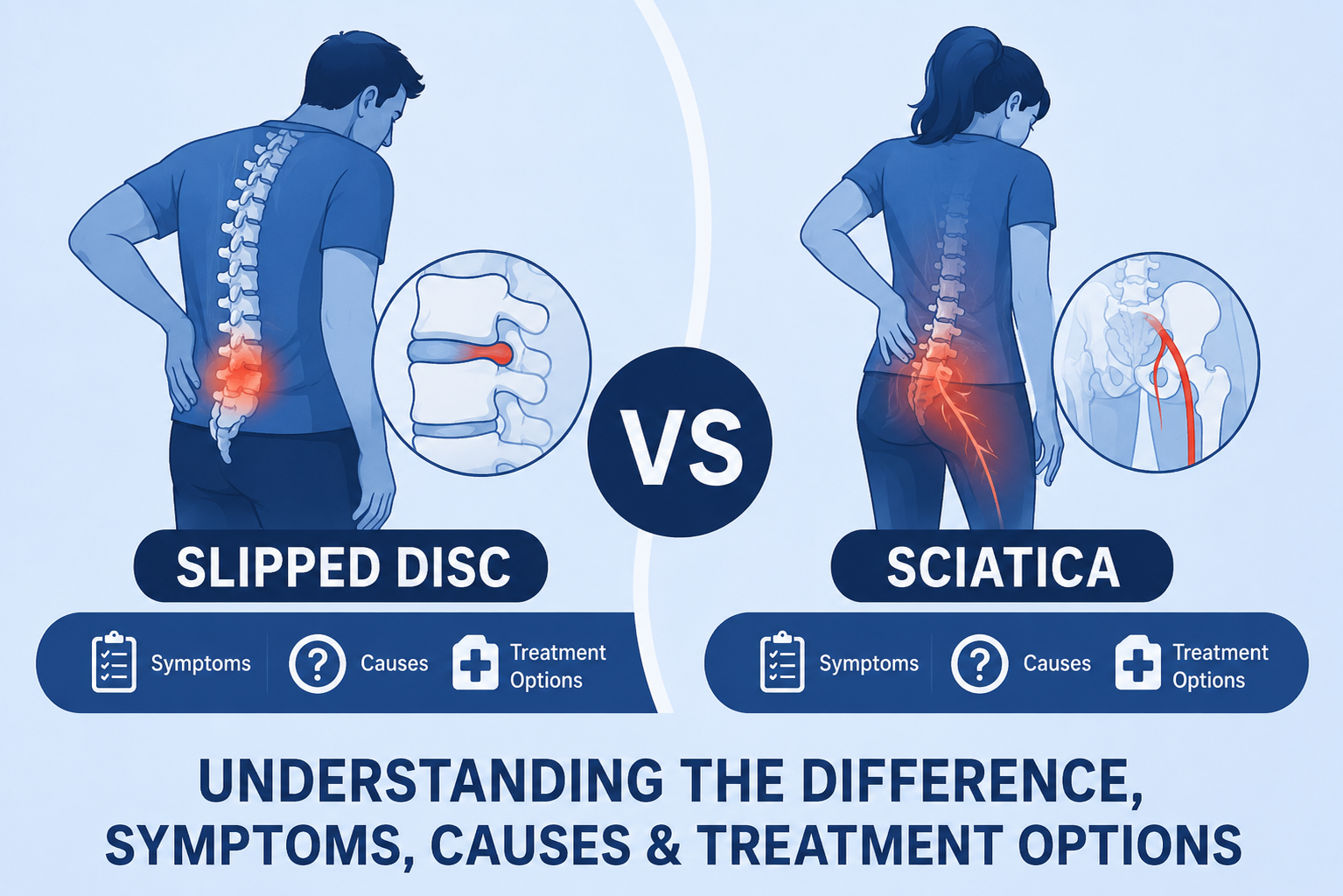
Back pain is one of the leading causes of discomfort and disability worldwide. However, when back pain is accompanied by leg pain, numbness, or tingling sensations, many people struggle to understand whether they are dealing with a slipped disc or sciatica. Understanding Slipped Disc vs Sciatica is essential because these conditions are closely related but not identical.
Many patients experiencing lower back pain, radiating leg pain, or nerve-related symptoms often assume they have sciatica, while the underlying cause may actually be a slipped disc. Seeking timely evaluation from a Spine Specialist in Navi Mumbai can help identify the exact problem and prevent long-term complications.
At Dr. Sonawane Hospital, a trusted destination for Spine Surgery in Nerul, patients receive expert diagnosis and personalized treatment for slipped discs, sciatica, spinal stenosis, degenerative disc disease, and other spine disorders.
Slipped Disc vs Sciatica: Quick Answer
A slipped disc is a spinal condition where one of the discs between the vertebrae bulges or ruptures, potentially pressing on nearby nerves. Sciatica is a symptom caused by irritation or compression of the sciatic nerve, resulting in pain that radiates from the lower back down the leg.
In simple terms, a slipped disc is a medical condition, while sciatica is a symptom. A slipped disc is one of the most common causes of sciatica, but not every case of sciatica is caused by a slipped disc.
What Is a Slipped Disc?
A slipped disc, also known as a herniated disc or prolapsed disc, occurs when the soft inner portion of a spinal disc pushes through a tear in the outer layer. These discs act as shock absorbers between the bones of the spine, maintaining spinal flexibility and cushioning every movement.
When a disc bulges outward, it may compress nearby spinal nerves, causing pain, weakness, numbness, and restricted mobility. The lumbar spine (lower back) is the most commonly affected region, although cervical discs (in the neck) can herniate as well.
Patients often seek Slipped Disc Treatment when symptoms begin affecting their daily activities, work performance, and quality of life.
Common Causes of a Slipped Disc
- Age-related disc degeneration
- Poor posture over extended periods
- Heavy lifting with improper technique
- Repetitive bending and twisting movements
- Obesity placing excess stress on the spine
- Sedentary lifestyle weakening core support muscles
- Sports injuries involving sudden impact or overexertion
- Trauma or accidents causing direct spinal damage
What Is Sciatica?
Sciatica refers to pain caused by irritation or compression of the sciatic nerve, the largest nerve in the human body. This nerve originates in the lower spine and travels through the hips, buttocks, and down each leg, reaching all the way to the foot.
Because of the sciatic nerve’s extensive pathway, sciatica symptoms can appear at multiple points along the leg rather than remaining confined to the lower back. This widespread pain pattern is what makes sciatica particularly distressing for patients.
Unlike a slipped disc, sciatica is not a standalone diagnosis. It is a symptom indicating that a nerve is being compressed or irritated somewhere along its pathway. Identifying the root cause is what allows a specialist to plan the correct course of treatment.
Patients seeking Sciatica Treatment in Navi Mumbai commonly report radiating pain, tingling sensations, and numbness extending into one leg, sometimes accompanied by muscle weakness that affects walking and standing.
Common Sciatica Symptoms
- Sharp or burning pain running down one leg
- Pain radiating from the lower back to the foot
- Tingling or pins-and-needles sensations
- Numbness in the leg, calf, or foot
- Muscle weakness in the affected limb
- Difficulty standing upright or walking comfortably
- Pain that significantly worsens during prolonged sitting
Slipped Disc vs Sciatica: Key Differences
One of the most common questions patients ask is how to tell apart Slipped Disc vs Sciatica and identify which condition they may have.
| Feature | Slipped Disc | Sciatica |
| Type | Medical condition | Symptom |
| Cause | Disc damage or herniation | Sciatic nerve compression |
| Pain Location | Neck or lower back | Lower back, buttocks, leg |
| Leg Pain | May occur | Common symptom |
| Numbness | Possible | Common |
| Treatment | Slipped Disc Treatment | Sciatica Treatment in Navi Mumbai |
Understanding this distinction helps ensure patients receive the correct diagnosis and the most effective treatment plan for lasting relief.
Can a Slipped Disc Cause Sciatica?
Yes. A slipped disc is one of the most common causes of sciatica. When a damaged disc presses against the sciatic nerve roots in the lumbar spine, patients may develop severe leg pain, numbness, tingling, and muscle weakness that follows the sciatic nerve’s path down the leg.
This is precisely why discussions about Slipped Disc vs Sciatica are so frequent among patients experiencing back and leg pain together. The two conditions often present simultaneously, making professional evaluation essential for accurate diagnosis.
However, sciatica can also result from other causes, including spinal stenosis, degenerative disc disease, bone spurs, piriformis syndrome, spinal injuries, and nerve compression syndromes unrelated to disc herniation.
Slipped Disc Treatment Options
Most patients with a slipped disc respond well to conservative, non-surgical management, particularly when treatment begins early.
Non-Surgical Slipped Disc Treatment
- Physiotherapy targeting spinal flexibility and strength
- Anti-inflammatory and pain-relieving medications
- Activity modification to reduce strain on affected discs
- Posture correction for sitting, standing, and sleeping positions
- Core strengthening exercises to provide better spinal support
- Lifestyle modifications including weight management
When Surgery Is Considered
Surgical intervention may be recommended if symptoms persist for several months without improvement, if conservative treatment fails to provide adequate relief, if significant nerve compression develops, or if progressive muscle weakness occurs. Patients requiring advanced Spine Surgery in Nerul can benefit from modern minimally invasive procedures that reduce recovery time and improve long-term outcomes.
Sciatica Treatment in Navi Mumbai
The primary goal of Sciatica Treatment in Navi Mumbai is to relieve pressure on the sciatic nerve, manage pain effectively, and restore normal function and mobility.
Conservative Approaches
- Targeted physical therapy and stretching exercises
- Pain management through medications or injections
- Weight management to reduce spinal load
- Ergonomic adjustments to workstations and daily habits
Advanced Treatment Options
For severe or chronic sciatica that does not respond to conservative care, treatment may include nerve decompression procedures, minimally invasive spine surgery, or surgical correction of the underlying spinal abnormality causing compression.
When Should You See a Spine Specialist?
You should consult a Spine Specialist in Navi Mumbai if you experience persistent back pain or leg pain lasting more than a few weeks, numbness or tingling that spreads into the limbs, progressive muscle weakness affecting daily activities, difficulty walking or maintaining balance, or any loss of bladder or bowel control, which requires urgent medical attention.
Expert Spine Care at Dr. Sonawane Hospital
Choosing the right hospital matters significantly when managing complex spine conditions. Dr. Sonawane Hospital is recognized for providing comprehensive spine care, ranging from conservative management to advanced Spine Surgery in Nerul.
Patients from Nerul, Seawoods, Belapur, Vashi, CBD Belapur, Kharghar, and across Navi Mumbai visit the hospital for accurate diagnosis and effective treatment of slipped discs, sciatica, spinal stenosis, and nerve compression disorders. The focus remains on evidence-based treatment and individualized patient care for the best possible recovery outcomes.
Tips to Prevent Slipped Disc and Sciatica
- Maintain good posture during all daily activities
- Exercise regularly to keep the spine strong and flexible
- Strengthen core muscles to support the lumbar spine
- Avoid prolonged sitting without postural breaks
- Lift heavy objects using proper technique, bending at the knees
- Maintain a healthy body weight to reduce spinal load
- Use ergonomic workstations designed to reduce spinal strain
Frequently Asked Questions
Is sciatica always caused by a slipped disc?
No. While a slipped disc is one of the most common causes, sciatica can also result from spinal stenosis, bone spurs, degenerative disc disease, or other forms of nerve compression.
Can a slipped disc heal without surgery?
Yes. Many patients improve significantly with physiotherapy, medications, exercise, and lifestyle modifications without requiring surgery.
When should I consult a Spine Specialist in Navi Mumbai?
Consult a specialist if you experience persistent back pain, leg pain, numbness, tingling, or weakness that interferes with daily activities or worsens over time.
How do I know whether I have a slipped disc or sciatica?
A medical evaluation including MRI imaging can help determine whether your symptoms are caused by a slipped disc, sciatica, or another underlying spinal condition.
Conclusion
Understanding Slipped Disc vs Sciatica is important for anyone experiencing persistent back pain, leg pain, numbness, or weakness. While a slipped disc is a structural spinal condition, sciatica is a symptom arising from nerve compression that may or may not be disc-related. Because symptoms frequently overlap, professional diagnosis is essential for effective treatment.
Whether you require Slipped Disc Treatment, Sciatica Treatment in Navi Mumbai, or advanced Spine Surgery in Nerul, early intervention can help prevent complications and improve recovery. Consult a qualified spine specialist at Dr. Sonawane Hospital for an accurate diagnosis and a personalized treatment plan tailored to your condition.