Joint Replacement Surgery in Navi Mumbai: Common Conditions That May Require Surgery
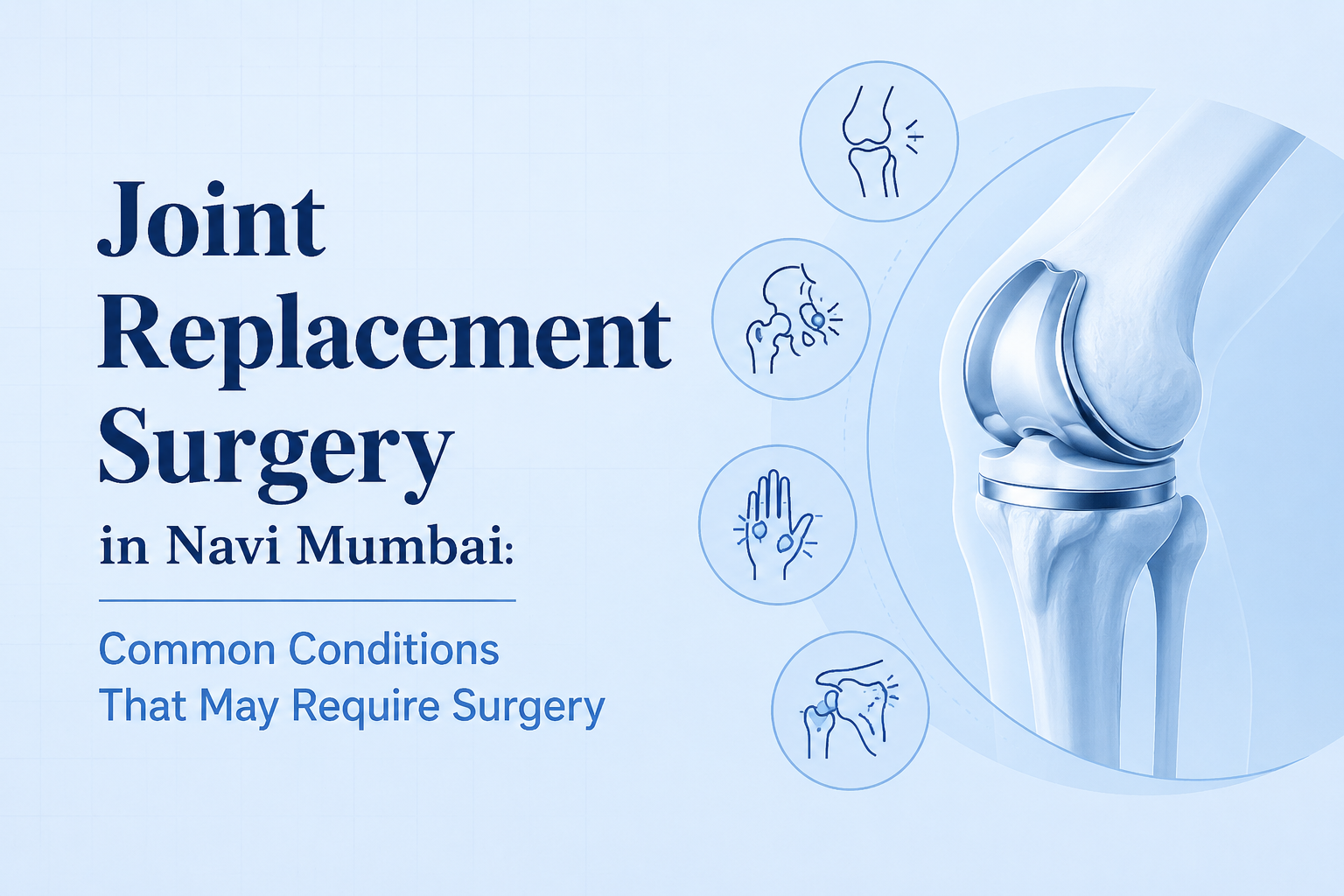
Joint pain is not simply a part of growing older. When discomfort becomes persistent, restricts movement, and begins to affect everyday tasks even after medications, physiotherapy, or lifestyle changes it may signal significant joint damage requiring medical intervention. In such cases, joint replacement surgery in Navi Mumbai can help restore movement, relieve chronic joint pain, and meaningfully improve your quality of life.
At Dr. Sonawane Hospital, we recognise that this is a major decision. Led by Dr. Avinash Sonawane, an experienced orthopaedic surgeon in Navi Mumbai with over 30 years of surgical expertise, our hospital provides thorough evaluations and personalised treatment plans for patients dealing with severe joint damage. We specialise in knee replacement surgery, hip replacement surgery, shoulder replacement surgery, arthroscopy, spine surgery, paediatric orthopaedics, and trauma care all with one goal: helping patients regain pain-free mobility and independence.
What Is Joint Replacement Surgery?
Joint replacement surgery is an orthopaedic procedure in which damaged or severely worn joint surfaces are replaced with artificial implants, also called prostheses. These implants are engineered to replicate the natural movement of a healthy joint, reducing pain and restoring function.
The procedure is most commonly performed on the knee, hip, and shoulder joints. The aim is not merely to eliminate pain it is to help patients walk freely, sleep comfortably, and return to activities they value most.
Who Needs Joint Replacement Surgery?
Joint replacement surgery is recommended when joint damage is severe enough that non-surgical approaches no longer provide meaningful relief. Patients who may benefit include those with:
- Severe osteoarthritis causing persistent pain and restricted movement
- Rheumatoid arthritis with progressive joint destruction despite medical management
- Chronic knee pain from advanced knee arthritis or post-traumatic damage
- Hip degeneration due to severe hip arthritis or avascular necrosis
- Shoulder arthritis or irreparable rotator cuff damage
- Post-traumatic arthritis following road accidents, falls, or sports injuries
- Significant joint deformity limiting daily independence
If you belong to any of these groups and conservative treatment has not brought adequate relief, consulting a joint replacement specialist is an important next step.
Symptoms That May Indicate the Need for Joint Replacement Surgery
Recognising warning signs early can lead to timely evaluation and better long-term outcomes. Symptoms to watch for include:
- Persistent joint pain lasting several months that does not improve with rest or medication
- Swelling around the joint that recurs frequently, even with minimal activity
- Morning stiffness or stiffness after sitting for extended periods
- Difficulty walking or bearing weight on the affected leg
- Pain during sleep that disrupts rest
- Inability to perform routine activities such as bending, climbing stairs, or dressing
- Visible joint deformity bowing of the knee, a tilted hip, or a misaligned shoulder
If you are experiencing one or more of these symptoms persistently, schedule a consultation with an orthopaedic surgeon in Navi Mumbai for a thorough assessment.
How Are Joint Conditions Diagnosed?
Before recommending surgery, a joint replacement specialist conducts a comprehensive evaluation to confirm the extent of joint damage and identify the most appropriate course of treatment. Diagnosis typically involves:
- Physical examination to assess range of motion, swelling, tenderness, alignment, and function
- X-rays to evaluate bone structure, cartilage loss, joint space narrowing, and bone spurs
- MRI scans to examine soft tissue structures including cartilage, ligaments, and tendons
- CT scans when complex joint anatomy or fracture assessment requires precise imaging
- Blood tests in cases of suspected rheumatoid arthritis, measuring inflammatory markers such as ESR, CRP, and rheumatoid factor
This process allows the orthopaedic surgeon to determine whether surgery is warranted or whether non-surgical joint pain treatment can still be effective.
Common Conditions That May Require Joint Replacement Surgery
-
Osteoarthritis
Osteoarthritis is among the most common reasons patients seek joint replacement surgery in Navi Mumbai. It develops when protective cartilage covering bone ends gradually breaks down, causing bones to rub directly against each other. This leads to persistent joint pain, stiffness, swelling, and reduced range of motion. When medications and physiotherapy no longer provide adequate relief, knee replacement surgery or hip replacement surgery offers the most reliable long-term solution.
-
Rheumatoid Arthritis
Rheumatoid arthritis (RA) is an autoimmune condition in which the body attacks its own joint lining. Ongoing inflammation destroys cartilage and bone, causing deformity, chronic joint pain, and loss of movement. While medications help many RA patients manage symptoms, some experience progressive joint destruction despite treatment. Replacing the affected joint can significantly restore function and reduce pain.
-
Advanced Knee Arthritis
The knee is among the most commonly replaced joints, bearing a large portion of body weight during daily activity. Patients with advanced knee arthritis often describe constant pain that worsens with walking, prolonged standing, or climbing stairs. When conservative treatment no longer brings adequate relief, total or partial knee replacement surgery can restore stability and improve mobility.
-
Severe Hip Arthritis
Hip arthritis can turn routine actions walking, bending to put on shoes, or getting into a car — into painful and exhausting efforts. Patients typically experience deep groin pain, hip stiffness, and a progressive limp. When hip degeneration severely limits daily function, hip replacement surgery is one of the most consistently successful orthopaedic procedures available.
-
Joint Damage Following Trauma or Accidents
Serious injuries from road accidents, falls, or sports activities can result in lasting joint damage, including chronic joint pain, instability, reduced range of motion, and post-traumatic arthritis. When non-surgical measures fail to address ongoing joint damage, joint replacement surgery may offer the best pathway to long-term pain relief and restored function.
-
Avascular Necrosis (AVN)
Avascular necrosis occurs when blood supply to a bone is disrupted, causing bone tissue to weaken and collapse most commonly in the hip joint. Once the joint surface collapses, conservative joint arthritis treatment alone cannot restore structural integrity. Hip replacement surgery is often the most effective intervention at this stage.
-
Severe Shoulder Arthritis
Shoulder replacement surgery is performed less frequently than knee replacement surgery or hip replacement surgery but can make a transformative difference for patients with advanced shoulder arthritis, irreparable rotator cuff damage, or complex fractures. Patients often struggle with lifting, dressing, or reaching overhead. Replacing the damaged joint restores function and significantly reduces pain.
When Should You Consider Joint Replacement Surgery?
While non-surgical approaches are always explored first, delaying necessary surgery despite significant joint damage can further reduce mobility and overall health. Consider consulting an orthopaedic surgeon in Navi Mumbai if you experience:
- Persistent joint pain for several months unresponsive to rest or medication
- Pain that regularly disrupts sleep
- Difficulty walking, climbing stairs, or performing basic daily activities
- Joint stiffness limiting movement even after rest
- Little or no improvement from medications, physiotherapy, or injections
- Progressive joint deformity worsening over time
Early consultation allows the joint replacement specialist to assess joint damage and determine whether surgery is the right course of action.
Benefits of Joint Replacement Surgery
Modern joint replacement surgery in Navi Mumbai offers excellent long-term outcomes for carefully selected patients:
- Long-lasting pain relief — Artificial implants eliminate bone-on-bone friction, the primary source of pain in advanced arthritis
- Improved mobility — Patients walk, climb stairs, and move with significantly greater ease
- Better quality of life — Many patients return to hobbies and daily routines they had been forced to avoid
- Greater independence — Relief from chronic joint pain reduces dependence on caregivers
- Durable implants — Modern prostheses are designed to last 15–20 years or more with appropriate care
- Faster recovery — Advanced surgical techniques and structured rehabilitation support quicker return to function
Why Choose Dr. Sonawane Hospital for Joint Replacement Surgery in Navi Mumbai?
At Dr. Sonawane Hospital, patients receive care that combines extensive clinical experience with a personalised approach. Patients benefit from:
- Over 30 years of orthopaedic surgical expertise under Dr. Avinash Sonawane, a trusted joint replacement specialist in Navi Mumbai
- Comprehensive pre-operative evaluation and personalised treatment planning
- Specialised expertise in knee replacement surgery, hip replacement surgery, and shoulder replacement surgery
- Advanced surgical techniques focused on precision, safety, and long-term outcomes
- Structured post-operative rehabilitation to support recovery and restore mobility
- A patient-centred philosophy prioritising long-term functional outcomes
Whether you are dealing with osteoarthritis, rheumatoid arthritis, post-traumatic arthritis, or avascular necrosis, our team will work with you to identify the most appropriate joint pain treatment pathway and support you at every stage of recovery.
Conclusion
Chronic joint pain should not define how you live your life. Conditions such as osteoarthritis, rheumatoid arthritis, advanced knee arthritis, severe hip arthritis, traumatic joint damage, avascular necrosis, and shoulder arthritis can all significantly affect mobility and independence but effective treatment is available.
If non-surgical approaches are no longer providing meaningful relief, joint replacement surgery in Navi Mumbai may be the right next step. Early consultation with a qualified orthopaedic surgeon in Navi Mumbai can help you make an informed decision and get back to moving freely and comfortably.
Schedule a consultation with the orthopaedic team at Dr. Sonawane Hospital today.
Frequently Asked Questions (FAQs)
- Which conditions most commonly require joint replacement surgery?
The most frequent conditions include osteoarthritis, rheumatoid arthritis, severe knee arthritis, hip degeneration, avascular necrosis, post-traumatic arthritis, and advanced shoulder arthritis. - Is joint replacement surgery only for older adults?
No. Younger patients with severe joint damage caused by arthritis, injury, or other conditions can also be candidates for joint replacement surgery when non-surgical treatment has failed. - How long does recovery take after joint replacement surgery?
Most patients begin walking with assistance within one to two days of surgery and continue structured rehabilitation over the following weeks and months. - How long do artificial joint implants last?
Modern implants typically last 15–20 years or longer, depending on the patient’s activity level, body weight, implant type, and overall health. - When should I see an orthopaedic surgeon in Navi Mumbai for joint pain?
If joint pain persists despite medications, physiotherapy, or lifestyle changes or if it is affecting your sleep, walking ability, or daily independence consult a joint replacement specialist for a thorough evaluation and personalised joint pain treatment plan.