Emergency Trauma Surgery: What Happens in the First Few Hours After a Serious Injury?
Tags: #DrAvinashSonawane, #DrSonawaneHospital, #EmergencyTraumaSurgery, #NaviMumbai, #Nerul, #OrthopedicTrauma, #TraumaSurgery, #TraumaSurgeryNaviMumbai, #TraumaSurgeryNerul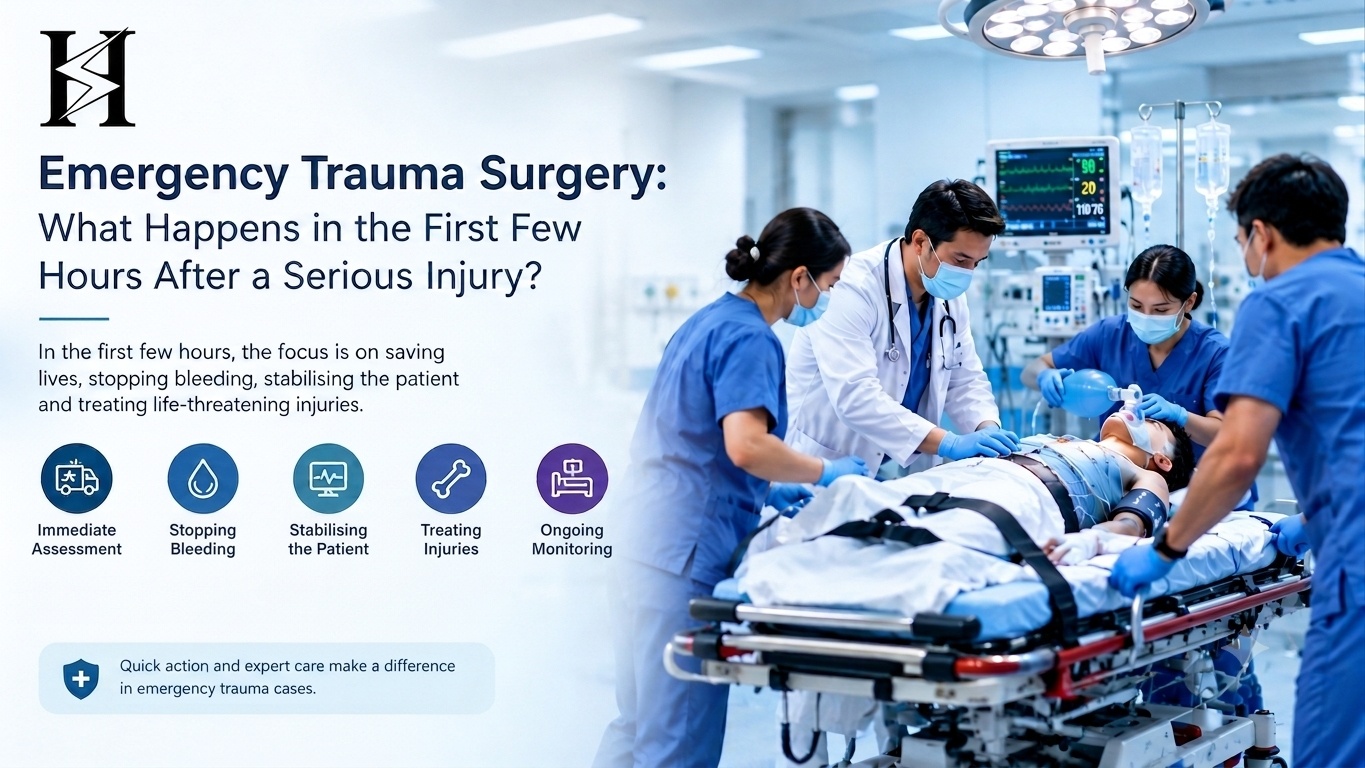
A serious accident can change a person’s condition within minutes. A road accident, major fall, sports injury, or workplace accident may cause fractures, dislocations, bleeding, or damage to muscles and joints. In such situations, the first few hours are extremely important. Prompt assessment and appropriate treatment can help stabilize the patient and reduce the risk of complications.
When emergency surgical treatment is required, trauma surgery in Nerul focuses on quickly identifying the injury, stabilizing the patient, and deciding the safest treatment approach. At Dr. Sonawane’s Hospital in Nerul, Navi Mumbai, Dr. Avinash Sonawane provides trauma care for orthopedic injuries, including fractures, dislocations, open fractures, and injuries caused by road accidents.
What Happens Immediately After a Serious Injury?
The first step is usually a rapid assessment of the patient. Doctors check vital signs, the condition of the injured area, movement, circulation, and other signs that may indicate a serious injury.
In major trauma cases, the medical team first focuses on keeping the patient stable. This may include controlling external bleeding, protecting the injured area, managing pain, and preventing unnecessary movement of a suspected fracture or spinal injury.
This initial stage is an important part of trauma surgery in Navi Mumbai, because treatment decisions depend on the patient’s overall condition as well as the type and severity of the injury.
Step 1: Stabilising the Patient
Before surgery is considered, doctors need to make sure the patient is medically stable. A serious injury may involve more than one affected area, so the medical team evaluates the patient systematically.
The injured limb may be immobilised using a splint or other support. If there is significant bleeding, immediate measures may be required to control it. Pain management may also begin during this stage.
For patients requiring trauma surgery in Nerul, early stabilization provides a safer foundation for further examination, imaging, and treatment.
Step 2: Identifying the Injury
Once the immediate condition is under control, doctors assess the injury in greater detail. X-rays and other imaging tests may be recommended depending on the suspected injury.
Imaging can help identify broken bones, displaced fractures, joint dislocations, and other orthopedic damage. An open fracture, for example, requires particularly prompt attention because the broken bone has damaged the skin and there is an increased risk of infection.
The findings help the orthopedic surgeon decide whether the injury can be managed without surgery or requires an operation. This careful assessment is a key part of trauma surgery in Navi Mumbai, where treatment needs to be based on the individual injury rather than a fixed approach.
Step 3: Deciding Whether Surgery Is Necessary
Not every accident-related injury requires an operation. Some fractures may be treated with casting, splinting, immobilization, or closed reduction. However, surgery may be considered when a fracture is significantly displaced, unstable, open, or difficult to maintain in the correct position.
Surgical treatment may involve plates, screws, rods, or external fixation devices depending on the injury. In some cases, joint stabilization or minimally invasive fracture fixation may be appropriate.
The decision for trauma surgery in Nerul is made after considering factors such as the location of the injury, bone alignment, soft-tissue damage, overall health, and the patient’s expected recovery needs.
Step 4: Treating Complex Injuries
Some accidents cause multiple injuries at the same time. A patient may have more than one fracture or injuries involving different joints and areas of the body. These cases require careful prioritization.
When an injury involves the spine, for example, protecting the affected area and assessing neurological symptoms becomes particularly important. Appropriate evaluation can help determine whether specialized treatment such as spine surgery may be required.
For complex orthopedic emergencies, trauma surgery in Navi Mumbai involves not only repairing the visible injury but also considering how the treatment will affect mobility and function during recovery.
Step 5: Surgery and Fracture Stabilisation
When an operation is required, the goal is generally to restore proper alignment and provide enough stability for healing. Depending on the injury, the surgeon may use internal fixation with plates, screws, or rods, or external fixation when appropriate.
At Dr. Sonawane’s Hospital, trauma care includes fracture fixation, internal and external fixation techniques, modern operating facilities, and follow-up rehabilitation. Dr. Avinash Sonawane evaluates the injury and selects the treatment approach according to the patient’s condition.
Timely trauma surgery in Nerul can be particularly important in injuries where delayed treatment could contribute to poor bone alignment, infection, stiffness, or long-term functional problems.
What Happens After Emergency Trauma Surgery?
Treatment does not end when the operation is completed. The patient may need observation, wound care, medication, movement restrictions, and follow-up appointments. Rehabilitation can then become an important part of recovery.
Depending on the injury, physiotherapy may focus on improving strength, flexibility, joint movement, balance, and gradual weight-bearing. Recovery time varies significantly between patients and depends on the injury, type of treatment, age, general health, and rehabilitation progress.
Patients receiving trauma surgery in Navi Mumbai should follow their surgeon’s instructions carefully and attend recommended follow-up appointments.
When Should You Seek Emergency Trauma Care?
Immediate medical evaluation is important after a serious accident, especially when there is severe pain, visible deformity, significant swelling, inability to move a limb, an open wound near a fracture, heavy bleeding, loss of sensation, or difficulty putting weight on an injured limb.
Trying to straighten a visibly deformed bone or continuing to walk on a severely injured limb can make the situation worse. Instead, keep the injured area as still as possible and seek urgent medical attention.
For patients looking for trauma surgery in Nerul, Dr. Sonawane’s Hospital provides orthopedic trauma care in Nerul, Navi Mumbai, with assessment, surgical treatment when required, and rehabilitation support.
Conclusion
The first few hours after a serious injury can influence how treatment progresses. Rapid stabilization, accurate diagnosis, appropriate imaging, and timely intervention help doctors choose the safest course of action. Not every trauma injury requires surgery, but injuries that need surgical stabilization should not be unnecessarily delayed.
With timely assessment and experienced orthopedic care, trauma surgery in Navi Mumbai can help manage serious fractures, dislocations, open injuries, and other accident-related orthopedic conditions. At Dr. Sonawane’s Hospital, Dr. Avinash Sonawane provides trauma care with a focus on appropriate treatment, patient safety, and recovery.
Frequently Asked Questions
2. Does every accident injury require trauma surgery?
No. Some injuries can be treated with immobilization, casting, splinting, or other non-surgical methods. Surgery depends on the severity, location, stability, and type of injury.
3. Why is early treatment important after a serious injury?
Early assessment can help identify serious injuries, stabilize the affected area, and reduce the risk of complications such as infection, poor bone healing, deformity, or prolonged loss of movement.
4. How long does recovery take after trauma surgery?
Recovery varies according to the injury and treatment. Some patients may begin controlled movement relatively early, while complex fractures or multiple injuries may require a longer rehabilitation period.
5. Where can I get trauma surgery in Nerul?
Patients seeking trauma surgery in Nerul can consult Dr. Avinash Sonawane at Dr. Sonawane’s Hospital, Sector 27, Nerul East, Navi Mumbai, for assessment and appropriate orthopedic trauma treatment.