Is Your Child’s Walking Pattern Normal? Signs Parents Shouldn’t Ignore
Tags: #Nerul, Bow Legs, Child Orthopaedic Care, Flat Feet, Knock Knees, Navi Mumbai, Paediatric Orthopaedics, Paediatric Orthopaedics in Nerul, Walking Problems in Children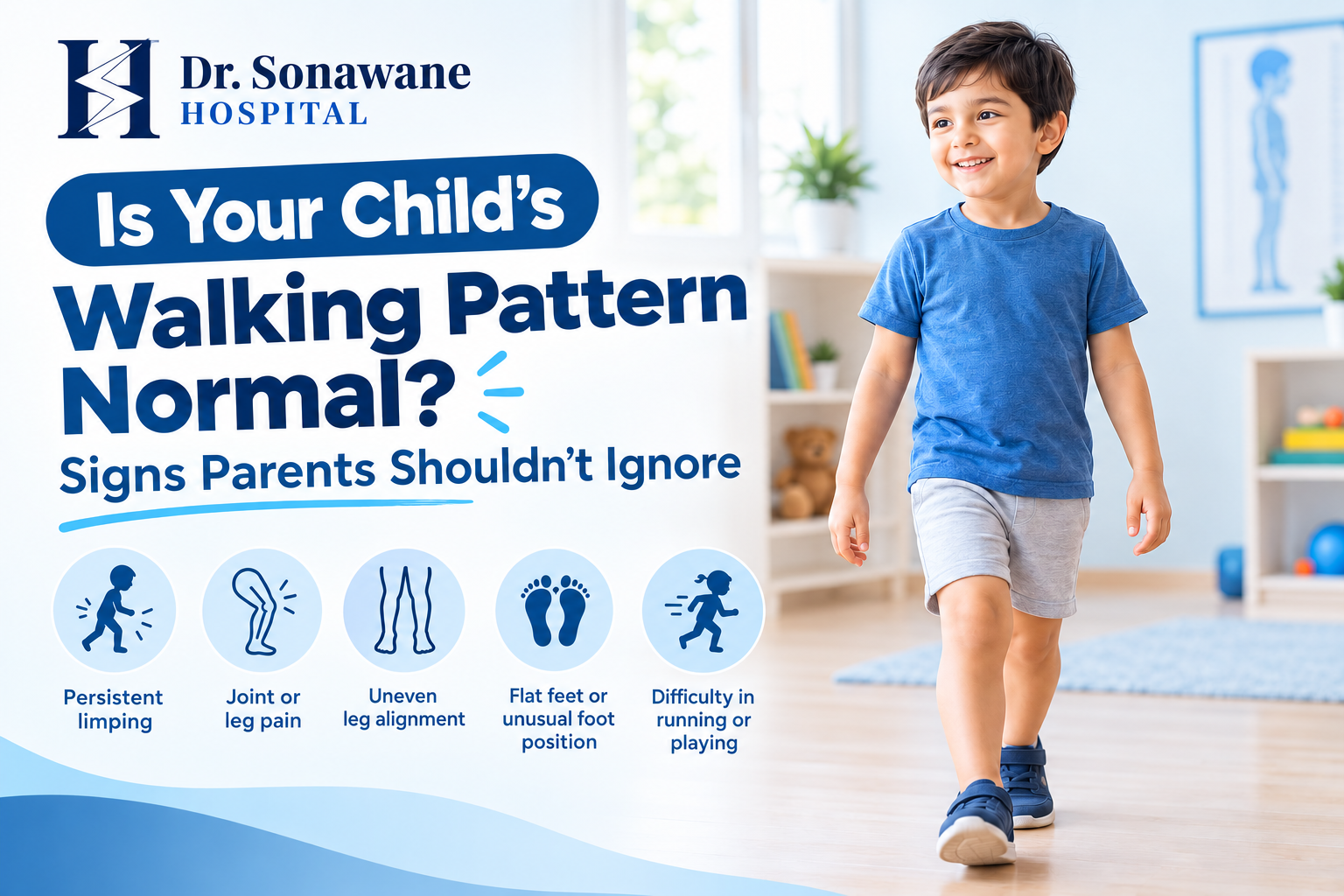
Children change quickly as they grow, and their walking pattern can look different at different stages of development. Occasional trips, awkward steps, or temporary changes may not always indicate a problem. However, persistent limping, difficulty walking, visible deformities, or ongoing pain may need professional assessment.
Paediatric Orthopaedics in Nerul focuses specifically on musculoskeletal conditions affecting infants, children, and adolescents. Because children’s bones, joints, and growth plates are still developing, their orthopaedic care can differ from that of adults.
When Should Parents Pay Attention to Walking Changes?
A child’s walking pattern can naturally change with age. Still, parents should consider an evaluation when a walking problem continues or is accompanied by other noticeable symptoms.
Signs that may warrant an orthopaedic consultation include:
- Persistent limping
- Difficulty walking or running
- Frequent complaints of leg, knee, hip, or foot pain
- Noticeable differences between the two legs
- Feet turning significantly inward or outward
- Difficulty participating in normal physical activities
- Visible changes in leg or joint alignment
The hospital’s paediatric orthopaedic guidance specifically identifies persistent joint pain, visible deformity, limping, or difficulty walking as reasons to seek specialist consultation.
Could Bow Legs or Knock Knees Be the Reason?
Some children naturally have bow legs or knock knees during particular stages of growth. Mild alignment changes can sometimes correct naturally, while more pronounced or persistent deformities may require observation or treatment.
This is one reason Paediatric Orthopaedics in Nerul can be useful for parents who are uncertain about whether their child’s leg alignment is part of normal development. The hospital notes that severe cases may require monitoring or treatment depending on the child’s condition.
What About Flat Feet?
Flat feet are relatively common among children. In many cases, they may not cause symptoms or interfere with activity. However, persistent flat feet accompanied by pain or functional difficulties may require evaluation.
A specialist may assess the child’s foot structure, walking pattern, symptoms, and overall development before deciding whether observation, exercises, physiotherapy, bracing, or another treatment is appropriate.
Why Early Evaluation Can Matter
Children’s bones continue to grow, which means some orthopaedic conditions can change as the child develops. Paediatric Orthopaedics in Nerul may involve monitoring growth, diagnosing developmental problems, and deciding whether treatment is necessary.
Depending on the condition, treatment can range from observation and physiotherapy to casting, splinting, bracing, or surgery. The appropriate approach depends on the child’s individual diagnosis and stage of development.
Parents can learn more about Paediatric Orthopaedics in Nerul and the conditions treated at Dr. Sonawane’s Hospital.
When Is a Child Orthopaedic Consultation Recommended?
A Paediatric Orthopaedics in Nerul consultation can be considered when a walking concern is persistent rather than occasional. It may also be appropriate after an injury, when a child has a visible deformity, or when pain repeatedly limits normal activities.
The goal is not to assume that every unusual movement represents a serious condition. Instead, an assessment can help determine whether the child’s development is progressing normally or whether further monitoring or treatment is needed.
Dr. Avinash Sonawane provides paediatric orthopaedic care at the hospital in Nerul, Navi Mumbai, including evaluation and management of childhood fractures, deformities, joint abnormalities, spine conditions, and sports injuries.
Helping Your Child Stay Active and Comfortable
Parents are often the first to notice changes in how a child walks, runs, climbs stairs, or participates in sports. Keeping track of persistent symptoms can be helpful when discussing concerns with a doctor.
For families looking for Paediatric Orthopaedics in Nerul, Dr. Sonawane’s Hospital provides child-focused orthopaedic assessment and treatment. You can also visit the Dr. Sonawane’s Hospital website to explore available orthopaedic services and consultation information.
Final Thoughts
Not every unusual walking pattern is a sign of disease, but persistent changes should not be ignored. Paediatric Orthopaedics in Nerul can help parents understand whether a child’s walking pattern, leg alignment, foot position, or pain requires observation or treatment. Early evaluation can provide clarity and help ensure that growing bones and joints receive appropriate care when needed.
FAQs
1. When should I take my child to an orthopaedic doctor?
Persistent limping, difficulty walking, recurring pain, or a visible deformity can be reasons to seek an orthopaedic evaluation.
2. Are bow legs always a problem?
No. Mild bow legs can occur during normal growth, but persistent or severe alignment issues may need monitoring.
3. Can flat feet in children require treatment?
Many children with flat feet have no problems, but painful or persistent cases may need assessment.
4. Does every childhood orthopaedic problem require surgery?
No. Treatment may include observation, physiotherapy, casting, splinting, or bracing, depending on the diagnosis.
5. Where can parents seek paediatric orthopaedic care in Navi Mumbai?
Dr. Sonawane’s Hospital provides Paediatric Orthopaedics in Nerul, Navi Mumbai, under Dr. Avinash Sonawane.